Movement is Medicine. Rebuild Your Support. Reclaim Your Life.
Whether you are relearning to walk after a stroke or rebuilding support around a new joint replacement, generic exercises aren't enough. We provide physician-led blueprints to rewire your brain and restore your structural independence.
Message Us to Book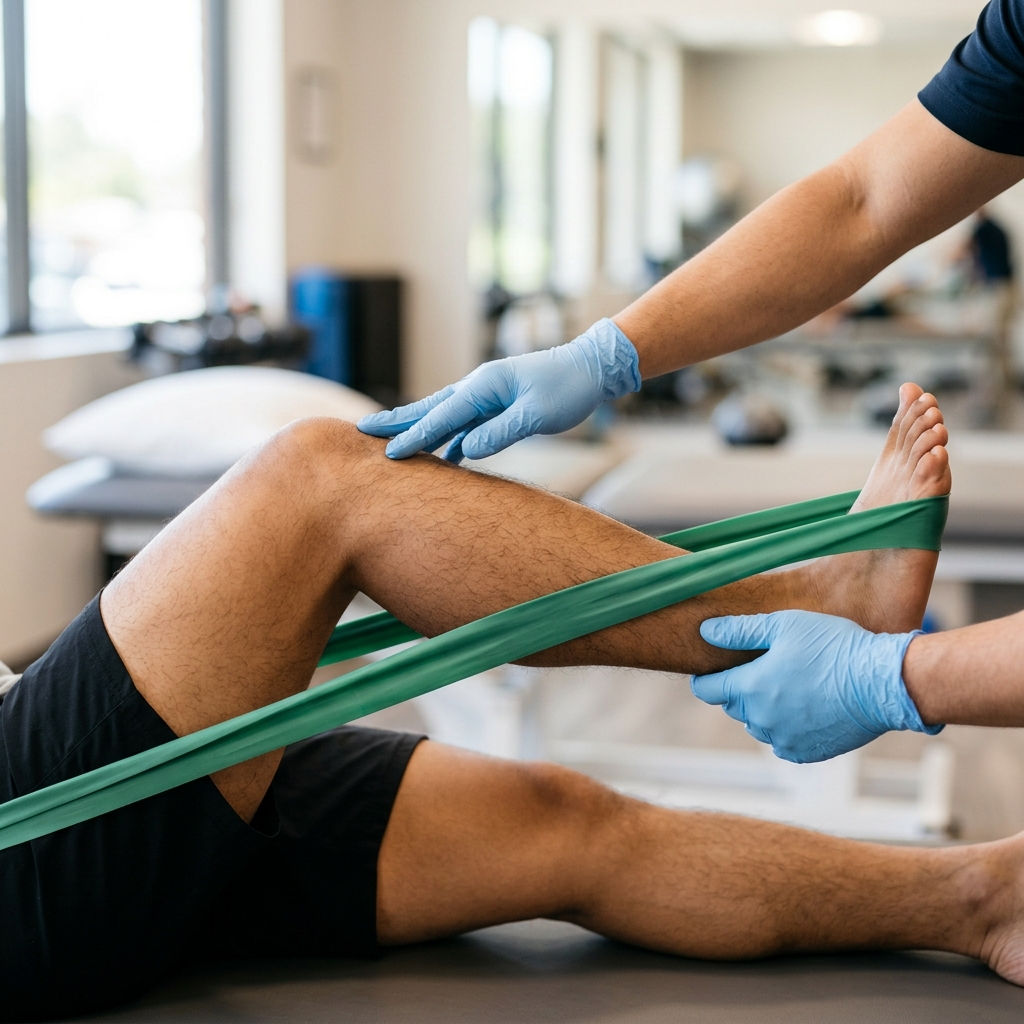
The Power of Physician-Led Rehabilitation
True healing requires much more than simply resting an injured joint or taking temporary pain medication. When a muscle tears, a joint is replaced, or the brain suffers a stroke, the body's natural movement 'software' is severely disrupted. Without guided, structural intervention, you will naturally develop 'compensatory movements'—limps and bad postures that inevitably lead to chronic pain in other parts of your body.
At TeraCare, Dr. Rabara designs highly specific, physician-led physical therapy blueprints. We divide our expertise into two pillars: Orthopedic Rehabilitation (rebuilding the structural mechanics of bones and tendons) and Neurological Rehabilitation (rewiring the brain-to-muscle connection). By attacking the root cause of your movement dysfunction, we don't just reduce your pain—we rebuild your internal support systems so you can move freely again.
Conditions We Actively Rehabilitate
Is Clinical Physical Therapy Right for You?
You are an EXCELLENT candidate if:
- You are recovering from orthopedic surgery and need to rebuild joint stability.
- You have suffered a stroke and need to relearn how to walk or use your hand.
- You have chronic back or knee pain that prevents work or sports activity.
- You have a neurological condition like Parkinson's needing balance training.
You may NOT be a candidate if:
- You have an acute, unstable bone fracture (unless cleared by a surgeon).
- Active systemic infections or deep vein thrombosis (DVT).
- Acute cardiopulmonary instability that prevents safe physical exertion.
The Realities of Active Rehabilitation
Movement is medicine, but it requires effort and consistency. We believe in clinical transparency during your recovery journey:
- Temporary Muscle Soreness: Expect mild muscle soreness (DOMS) for 24-48 hours after a session. This is a normal sign that your body is adapting and growing stronger.
- The Consistency Mandate: Progress made in the clinic must be solidified at home. Adherence to your Home Exercise Program (HEP) is the primary determinant of long-term success.
- Neurological Effort: Neuromuscular re-education is as much a mental workout as a physical one. Retraining the brain's pathways is exhausting, but essential for recovery.
Passive Modalities vs. Clinical Specialization
Relying on hot packs, basic ultrasound, and rub-downs with no active movement component.
A customized physiatric blueprint executed by therapists to rebuild muscle and rewire neural patterns.
The 3 Stages of Physical Rehabilitation
Pain & Swelling Management
Weeks 1-3. Focus on calming the injury, restoring range of motion, and learning joint protection techniques.
Motor Control & Stability
Weeks 3-6. Re-waking the muscles, correcting limps, and building foundational core support around the injury site.
Functional Independence
Weeks 6+. High-intensity training to prepare your body for the stresses of work, sports, and community navigation.
Clinical Science & Technical Details
For our medical colleagues and highly analytical patients, we provide these transparent technical details on the pathophysiology and interventional protocols.
Explore the Clinical Science: Wolff’s Law & Mechanotransduction
In orthopedic rehab, Wolff’s law states that bone and connective tissue will adapt to the loads under which it is placed. Through mechanotransduction, the brain translates mechanical stress into cellular signals.
Our protocols use targeted directional stress to force fibroblasts to lay down organized collagen fibers, transforming weak scar tissue into dense, functional Type I collagen for long-term joint integrity.
Detailed Diagnostic Pathways: Gait Analysis & Kinetic Chains
We don't just look at the knee; we look at the entire kinetic chain—from the hip to the ankle. Gait analysis allows us to identify 'Trendelenburg' patterns or pelvic tilts that cause distal pain.
By correcting these deep-seated biomechanical flaws, we eliminate the compensatory stress that often leads to secondary injuries in post-surgical or chronic pain patients.
Neuromuscular Re-education: Rewiring the CNS via PNF
Proprioceptive Neuromuscular Facilitation (PNF) is a core technique in our neuro-rehab program. We use specific diagonal patterns and resistance to stimulate the CNS to reorganize.
By flooding the brain with sensory feedback during movement, we encourage 'axonal sprouting' around damaged neural zones, allowing stroke survivors to regain motor control over paralyzed limbs.
Metrics of Success: Standardized Functional Scoring
Progress is never a guess. We Establish baseline metrics using Manual Muscle Testing (MMT), goniometry for degrees of rotation, and balance scales like the Berg or Tinetti.
For neurological patients, we track the Modified Ashworth Scale for spasticity and gait speed metrics. This data-driven approach allows Dr. Rabara to adjust your blueprint in real-time based on your actual biological response.
Our Scientific Path to Movement Mastery
Physiatric Movement Analysis
Dr. Rabara evaluates your gait, range of motion, and neurological reflexes to identify exactly where the 'software' is broken.
Blueprint Execution
You work one-on-one with certified therapists, following a medically supervised progression to rebuild strength without re-injury.
Transition to Performance
We bridge the gap from clinical rehab to life, ensuring you can return to your favorite sports or daily activities with full independence.
Common Questions
How long does a stroke recovery program take?
Neurological pathways take time to rewire. While some see gains in weeks, intensive post-stroke rehab typically requires 3 to 6 months of dedicated clinical work to achieve maximum independence.
Do you treat children?
Yes. Neurological rehabilitation extends to pediatric cases such as Cerebral Palsy or developmental motor delays, focusing on play-based functional strengthening.
What should I wear to my PT sessions?
Wear comfortable, loose-fitting athletic clothing and supportive sneakers. We need to be able to access the joint being treated and you need to be able to move freely.
Can I just do the exercises at home?
Guidance is critical. Performing exercises with 'compensatory patterns' or bad form can actually reinforce your injury. Clinical supervision ensures you are hitting the right muscles safely.
Is PT covered by PhilHealth?
Yes, many medically indicated rehab sessions, especially post-operative care and stroke recovery, are eligible for coverage. Our team helps provide the medical abstracts needed for your claims.