Protect Your Investment. Accelerate Your Healing. Reclaim Your Life.
Moving after surgery is terrifying, but staying still is your greatest risk. Our physician-led protocols provide a safe, scientific bridge between your surgeon's work and your return to full mobility.
Message Us to Book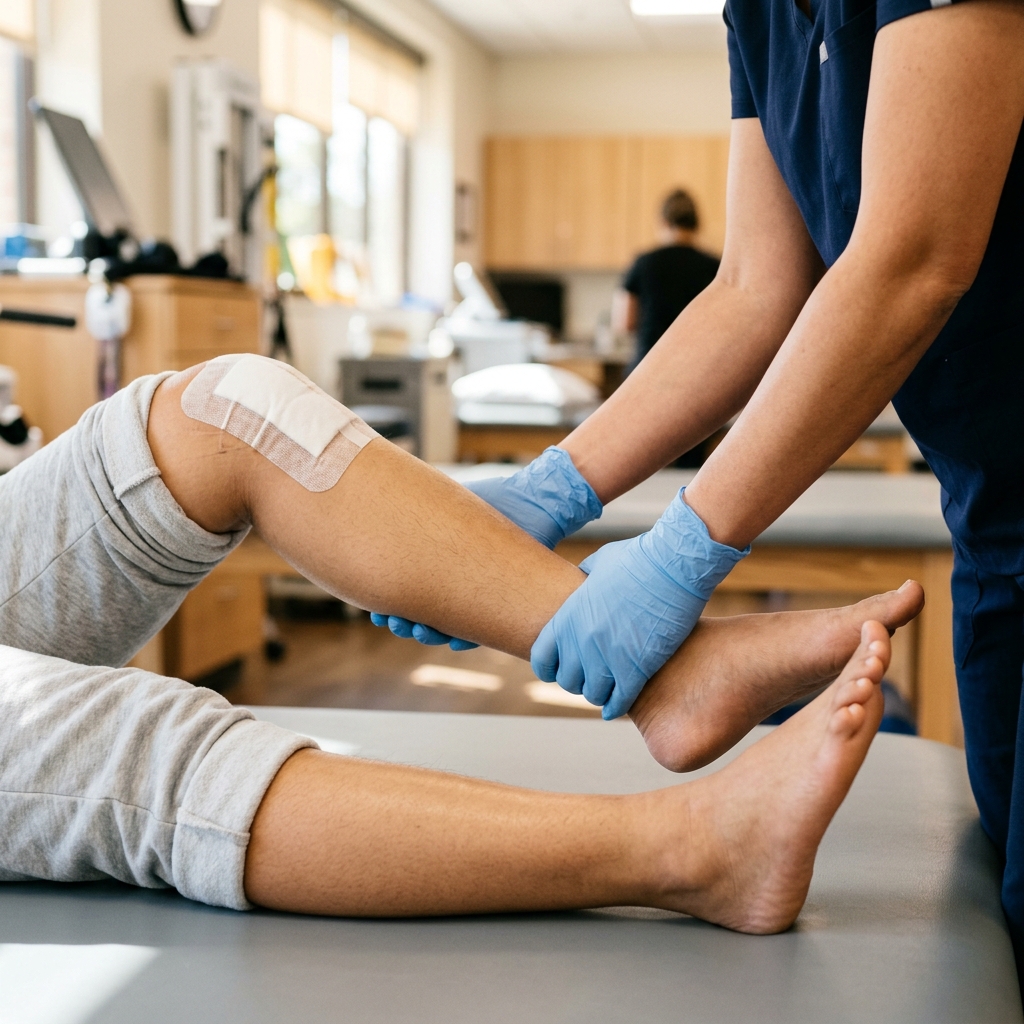
Briding the Gap Between 'Surgery' and 'Real Life'
You have successfully undergone a major orthopedic surgery—an investment in your future mobility. Right now, your joint is swollen, painful, and the thought of moving it feels dangerous. You may be worried that a simple stretch could 'break' the surgeon's hardware or tear your stitches. This fear is a biological survival instinct, but left unmanaged, it is your greatest obstacle to recovery.
When a joint remains immobilized after surgery, the body floods the area with collagen to heal. Without controlled movement, this collagen turns into thick, restrictive scar tissue—the 'Cement' analogy. At TeraCare, Dr. Rabara acts as the medical bridge between your surgeon and your recovery. By analyzing your specific operative report, we introduce 'Accelerated Loading'—applying the exact amount of mechanical stress needed to stimulate healing without ever jeopardizing the integrity of the repair.
Surgeries We Actively Rehabilitate
Is Accelerated Post-Op Rehab Right for You?
You are an EXCELLENT candidate if:
- Your surgeon has provided a clearance or protocol for physical therapy.
- You are experiencing severe stiffness or swelling that prevents sleep.
- You are terrified of moving the joint and need clinical supervision.
- You want to return to work or high-level sports safely and quickly.
You may NOT be a candidate if:
- Active surgical site infection (Erythema, purulent drainage).
- Suspected Deep Vein Thrombosis (DVT) needs urgent vascular clearance.
- Unstable fractures or failed hardware that needs revision surgery.
The Realities of Surgical Recovery
Protecting the repair is our first priority, but restoring function is our ultimate goal. Here is what to expect:
- Controlled Discomfort: Breaking down early scar tissue (adhesions) can be uncomfortable. We use specific manual techniques to minimize pain while maximizing joint range.
- Biological Timelines: We respect the 'Ligamentization' and 'Callus' phases. Accelerated rehab doesn't mean rushing; it means optimizing every day of the natural healing window.
- Surgeon Communication: Dr. Rabara maintains an open line with your operating surgeon. If you had your surgery in Manila, we ensure the protocol is followed precisely in Vigan.
Home Rest vs. Clinical Acceleration
Lying in bed until the pain stops before attempting to move the limb.
Phased, objective-driven protocols that protect the graft while restoring gait and ROM.
The 3 Phases of Accelerated Healing
Inflammation & ROM Focus
Weeks 1-4. Reducing swelling and preventing the joint from 'freezing.' Focus is on passive range of motion and wound safety.
Strength & Gait Restoration
Weeks 4-12. Waking up dormant muscles around the new joint or repair. Weaning off walkers, canes, and slings.
Return to High-Activity
Month 4+. Transitioning to power, balance, and impact training to prepare you for heavy work or sports.
Clinical Science & Technical Details
For our medical colleagues and highly analytical patients, we provide these transparent technical details on the pathophysiology and interventional protocols.
Explore the Clinical Science: Mechanotransduction & Tissue Remodeling
Surgical recovery depends on mechanotransduction—the process by which cells sense and respond to mechanical weight. Through phased loading, we signal the body to replace weak Type III collagen with strong, tensile Type I collagen.
By applying controlled therapeutic stress according to Wolff's Law, we ensure that new tissues (like an ACL graft or a rotator cuff anchor) remodel with the structural integrity needed for life and sport.
Detailed Diagnostic Pathways: DVT & Post-Op Infection Screening
Post-op patients are in a hyper-coagulable state. We rigorously screen for Deep Vein Thrombosis (DVT) using the Wells Score and clinical markers like Homan's sign to prevent pulmonary complications.
We also act as secondary monitors for the surgical site, identifying early signs of dehiscence or infection (erythema, warmth, fluctuance) to ensure clinical stability throughout the rehabilitation program.
The Passive to Active Framework: Protecting the Surgical Repair
In the early phases, we utilize Passive Range of Motion (PROM) to lubricate the joint and prevent adhesions without stressing the repaired tendons or hardware.
As biological healing progresses (monitored by Dr. Rabara), we bridge to Active-Assist and eventually full Resistance Training, ensuring the 'Rehabilitation Window' is never missed for peak functional outcomes.
Objective Progress Metrics: FIM, ROM & Joint Kinematics
Success is measured in degrees and strength ratios. We use goniometry to track joint flexibility and the Functional Independence Measure (FIM) to document your progression in daily tasks.
By analyzing joint kinematics and compensatory gait patterns (like an antalgic limp), we identify muscles that have gone 'dormant' after surgery and target them for reactivation via Neuromuscular Electrical Stimulation (NMES) when needed.
Our Scientific Recovery Pathway
Operative Report Sync
Dr. Rabara reviews the surgeon's exact hardware placements and repair tension to establish biological safety limits.
Phased Protocol Ignition
Our therapists move you from Passive Motion (protecting stitches) to Active Strengthening (rebuilding support).
Functional Graduation
We bridge the gap from clinical rehab to life, ensuring you can climb stairs, drive, and work without a limp.
Common Questions
I had my surgery in Manila. Can I do my rehab with you in Vigan?
Absolutely. Most patients prefer to do their long-term recovery locally. Just bring your operative abstract and your surgeon's specific protocol, and Dr. Rabara will ensure it is executed perfectly here.
How soon should I start after a knee replacement?
For most joint replacements, the earlier the better—often within 2 to 5 days of discharge. Early movement is the only way to prevent the chronic stiffness that ruins joint replacements.
Is it covered by PhilHealth?
Yes. Post-operative rehabilitation is a medically necessary procedure following surgery. We provide the clinical documentation required for PhilHealth and most major HMOs.
Will the therapy tear my stitches?
No. Every movement we perform is based on the specific tensile strength of your repair. We use physician-led protocols designed to stay safely within the limits of your healing tissues.
What is Arthrofibrosis?
It is essentially 'excessive internal scarring' that makes a joint feel like it is filled with cement. Specialized post-op rehab is the primary way to prevent this painful condition from happening.